

Jieyang, also know as (Chieh-yang), is located in eastern Guangdong Province, China, is a vibrant city known for its cultural heritage, economic development, and unique local traditions. Jieyang is predominantly inhabited by the Hakka ethnic group, and the city has a strong Hakka cultural influence. The Hakka people have their own distinct language, customs, and architecture, which can be seen in the traditional Hakka houses and the local way of life.
Teochew Cuisine: Jieyang is renowned for its delectable Teochew cuisine. Teochew cuisine is characterized by its emphasis on fresh ingredients, delicate flavors, and skillful culinary techniques. Jieyang is home to numerous restaurants and street food stalls where you can savor authentic Teochew dishes, such as braised goose, steamed pomfret, and Teochew-style porridge.
Traditional Crafts: Jieyang is known for its traditional handicrafts, including wood carving, bamboo weaving, and paper-cutting. Skilled artisans create intricate and beautiful artwork using these traditional techniques. Visitors can explore craft workshops and markets to witness the craftsmanship and even try their hand at creating their own crafts.
Lingxia Ancient Town: Within Jieyang, you can visit Lingxia Ancient Town, a well-preserved historical area that showcases traditional architecture, ancient temples, and ancestral halls. The town’s narrow streets, old buildings, and cultural relics provide a glimpse into the city’s past and offer a serene atmosphere for leisurely walks.
Chaozhou-Shantou Special Economic Zone: Jieyang is part of the Chaozhou-Shantou Special Economic Zone, which has contributed significantly to the city’s economic growth and development. The zone has attracted investments and industries, creating job opportunities and driving economic progress in Jieyang.
Festivals and Celebrations: Jieyang celebrates various traditional festivals and cultural events throughout the year. Festivals like the Lantern Festival, Dragon Boat Festival, and Mid-Autumn Festival are marked with colorful decorations, lively dragon and lion dances, and local performances. These festivities offer a chance to experience the vibrant culture and customs of the city.
Jieyang offers a unique blend of cultural heritage, culinary delights, traditional crafts, and economic vitality. Whether you are interested in exploring the local traditions, savoring delicious cuisine, or experiencing the city’s economic dynamism, Jieyang has much to offer to visitors seeking an authentic and diverse experience.
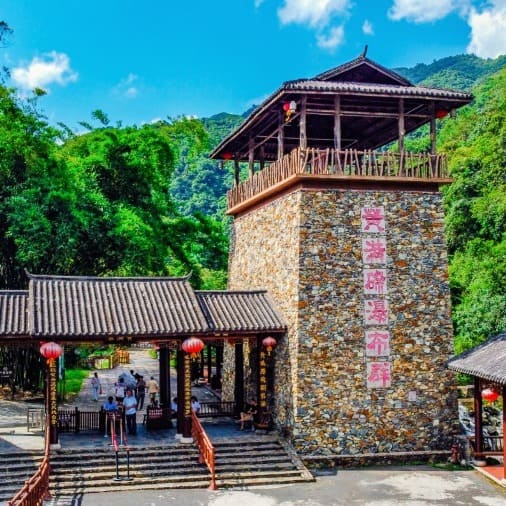
Huang Manzhai Waterfall
Huang Manzhai Waterfall, also known as Yellow Manzhai Waterfall, is a scenic attraction located in Jiexi County, Jieyang City, Guangdong Province, China. the Waterfall is renowned for its picturesque natural setting. It features a series of cascading waterfalls surrounded by lush greenery and rocky cliffs, creating a serene and tranquil atmosphere. The crystal-clear waters of the waterfall flow into a pool below, offering a refreshing sight.
Accessibility: The waterfall is located in the mountainous region of Jiexi County, which is about 90 kilometers northeast of Jieyang City. To reach Huang Manzhai Waterfall, visitors can travel by road from Jieyang City to Jiexi County and then follow local directions to the waterfall site. It’s recommended to arrange private transportation or join a guided tour for ease of access.
Photography Opportunities: With its stunning natural scenery, Huang Manzhai Waterfall provides ample opportunities for photography enthusiasts. Capture the cascading water, vibrant greenery, and the peaceful ambiance of the surroundings. Remember to bring your camera or smartphone to capture the beauty of the waterfall and its surroundings.
Local Culture and Cuisine: Jiexi County is known for its rich cultural heritage and local traditions. While visiting Huang Manzhai Waterfall, you can also explore the local village nearby and experience the local culture and cuisine. Taste authentic regional dishes and interact with the friendly locals to learn more about their way of life.

Xuegong
Xuegong, also known as the Temple of Confucius, is a notable historical and cultural site located in Jieyang, Guangdong, China. The temple dedicated to the renowned Chinese philosopher Confucius. Confucius, also known as Kong Zi, was an influential figure in Chinese history and philosophy. The temple is a place of reverence where people come to pay homage to Confucius and honor his teachings.
Architectural Features: Xuegong showcases traditional Chinese architecture and design. The complex consists of various halls, pavilions, courtyards, and beautiful landscaped gardens. The buildings are adorned with intricate woodcarvings, colorful paintings, and calligraphy, reflecting the artistic craftsmanship of ancient times.
Cultural Significance: Xuegong holds significant cultural and educational value. It was historically a place for the education and cultivation of scholars, where Confucian principles and teachings were imparted. The temple played a pivotal role in promoting education, ethics, and social harmony.
Confucian Rituals and Ceremonies: Xuegong continues to be a venue for Confucian rituals and ceremonies. Throughout the year, various events and ceremonies are held at the temple to commemorate Confucius and his teachings. These rituals often involve traditional music, dance, and recitations of Confucian classics.